
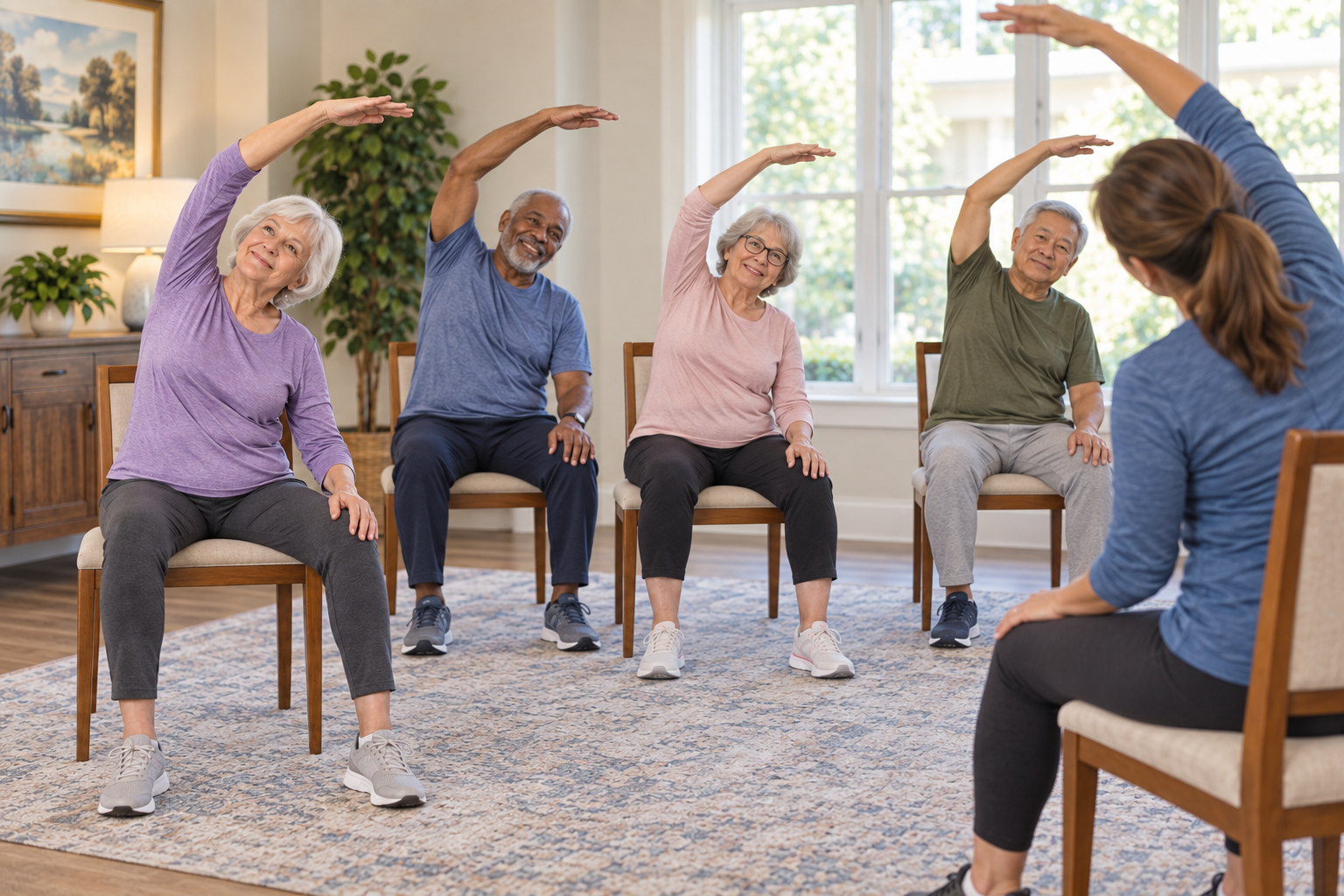

Mobility can change gradually with age. A senior may take longer to rise from a chair or feel less steady while walking. They may also find climbing stairs more difficult than before. These changes do not necessarily mean that independence is ending. They may simply show that the body needs a different pace or more support than before.
Gentle movement can help older adults continue doing what matters to them without turning every day into a demanding workout. At The Sonnet at Tennyson, an assisted living and memory care community in Madison, Wisconsin, personalized care helps residents take part in daily life according to their ability and preferences.
Senior Mobility Tips Start With What Matters to the Individual
The most useful senior mobility tips begin with a person’s own priorities. One senior may want to move around the apartment with greater confidence, while another may hope to keep dressing without assistance. Connecting movement to a meaningful goal gives it a clear purpose.
It also helps to notice what has changed. Mobility problems may appear as difficulty turning or needing to push harder when standing. Changes in balance or coordination can affect ordinary movement, as can discomfort in the joints or changes in vision. New pain or a noticeable change in the way someone walks should be discussed with a healthcare provider before the person tries to start exercising.

Use Physical Activity to Improve Mobility Gradually
Regular physical activity does not need to be strenuous to be valuable. A short walk or a few comfortable movements can help someone keep the body moving. Placing activity within a familiar daily routine may also make it feel more manageable.
An exercise program should reflect the person’s health and current movement. A physical therapist can assess mobility and recommend simple exercises. This guidance is especially useful when a person is returning to activity after an illness or has become worried about falling.
Encourage Movement Without Taking Away Choice
Encouragement should help a loved one feel capable, not watched or corrected. A family member might offer to walk alongside them or ask which activities they enjoy. The focus should remain on what the person can do safely.
The most important things are comfort and consistency. Movement should stop if it causes pain or dizziness. Rest should also be part of the routine. This approach can help a person stay active without feeling that every session must test their limits.
Practical details matter too. Proper footwear can provide a steadier base, while clear pathways make it easier to move through the home. A correctly fitted mobility aid may support walking, but it should be selected with professional guidance.
Build Strength for Everyday Movements
Useful movement is closely tied to everyday tasks. Standing from a seat and reaching for clothing depend on several muscle groups working together. Suitable activity may help strengthen muscles and improve range of motion for these actions.
Progress does not need to be dramatic. One comfortable repetition or a slightly longer walk can still be meaningful. Over time, appropriate movement may improve strength and improve flexibility. These changes can make daily activities feel less tiring while supporting a stronger sense of independence.
What Are the Best Mobility Exercises for Older Adults?
The best mobility exercises for older adults depend on their current strength, comfort, and health needs. Some people may begin with seated leg lifts, while others may feel ready for supported standing movements. Each exercise should be completed slowly, and a sturdy surface should remain nearby when balance is a concern.
Chair Squats for Lower Body Strength
Chair squats can build leg strength and strengthen the lower body for daily tasks such as standing up and sitting down. In the starting position, sit near the front of a stable chair with the feet hip width apart.
Place the arms forward, lean forward slightly, and press through both feet to stand. Lower back into the chair with control. Standing and sitting once counts as one rep. Anyone who requires physical assistance should not attempt this exercise alone.
Water Aerobics
Water aerobics allows the body to move while the water provides support. This may make activity feel more comfortable for someone who experiences stiffness or discomfort during exercise on land. Classes can vary in pace and intensity, so older adults should choose one that matches their current ability.
Wall Push Ups for Upper Body Strength
Wall push ups use body weight to build upper body strength. Stand facing a wall and place both hands about shoulder width apart. Bend the elbows slowly to bring the body closer to the wall, then press away with control. This exercise primarily strengthens the chest and the muscles at the back of the upper arms. Keep the back straight and the abdominal muscles gently engaged, avoiding sagging or arching.
Single Leg Stands to Improve Balance
Single leg stands may help improve balance when they are completed with suitable support nearby. Begin with both feet on the floor and hold a stable counter or chair. Lift one foot slightly before returning it to the ground.
Repeat the movement on the right and left leg. The goal is not to remain on one leg for as long as possible. A brief, controlled movement is more useful than continuing after balance begins to feel uncertain.
These exercises can be adjusted to suit different mobility levels. A physical therapist or healthcare provider can help determine which movements are appropriate, especially when pain or balance concerns affect everyday activity.
Know When Mobility Support Could Help
Exercise cannot address every mobility concern on its own. Changes to the living environment or help with personal care may become just as important. Accepting the right mobility support can allow someone to keep using the skills they have rather than becoming dependent unnecessarily.
At The Sonnet at Tennyson, customized care plans help align assistance with each resident’s needs. The community offers safety assistance features and a dedicated physical therapy room. Residents can also enjoy walking paths and exercise classes as part of the community lifestyle. These features can help seniors participate in everyday life with appropriate support nearby.
A Gentle Approach Can Help Seniors Remain Independent
The purpose of movement is not to reach a particular fitness level. It is to help each person remain involved in familiar routines and protect their quality of life. Patient encouragement and suitable assistance can help seniors remain independent while respecting the changes their bodies are experiencing.
The Sonnet at Tennyson offers assisted living and memory care in Madison, Wisconsin, with personalized support available around the clock. Get in touch with our team to learn more about life at The Sonnet at Tennyson or schedule a personal tour of our community.
Frequently Asked Questions
1. What health benefits can physical activity provide for healthy aging?
The health benefits of suitable activity can include stronger muscles and easier movement. Movement also supports the nervous system and may contribute to healthy aging. Someone living with heart disease or another ongoing condition should ask a healthcare professional which activities are safe. The goal is to support everyday function without creating unnecessary risk.
2. Can a Medicare plan help cover professional mobility support?
Coverage under a Medicare plan depends on medical necessity and the service being provided. Many families find it helpful to check the plan’s current terms before arranging professional care. Local senior centers may also offer fitness classes, although these are not a substitute for individualized clinical advice when mobility concerns are complex.
3. Why might a senior’s mobility change throughout the day?
Energy levels, joint stiffness, and the effects of medication can influence how comfortable movement feels at different times. A senior may feel steadier in the morning but need more support later in the day. Noticing these patterns can help families plan activities for times when movement feels easier.
Ready to experience the harmony of senior living? Contact The Sonnet at Tennyson to schedule a tour!